What was observed
In one tee-hitting study that recorded 1,000 times per second, the pelvis reached top speed 12 milliseconds before the chest and upper trunk. The upper trunk peaked 8 milliseconds before the hand.
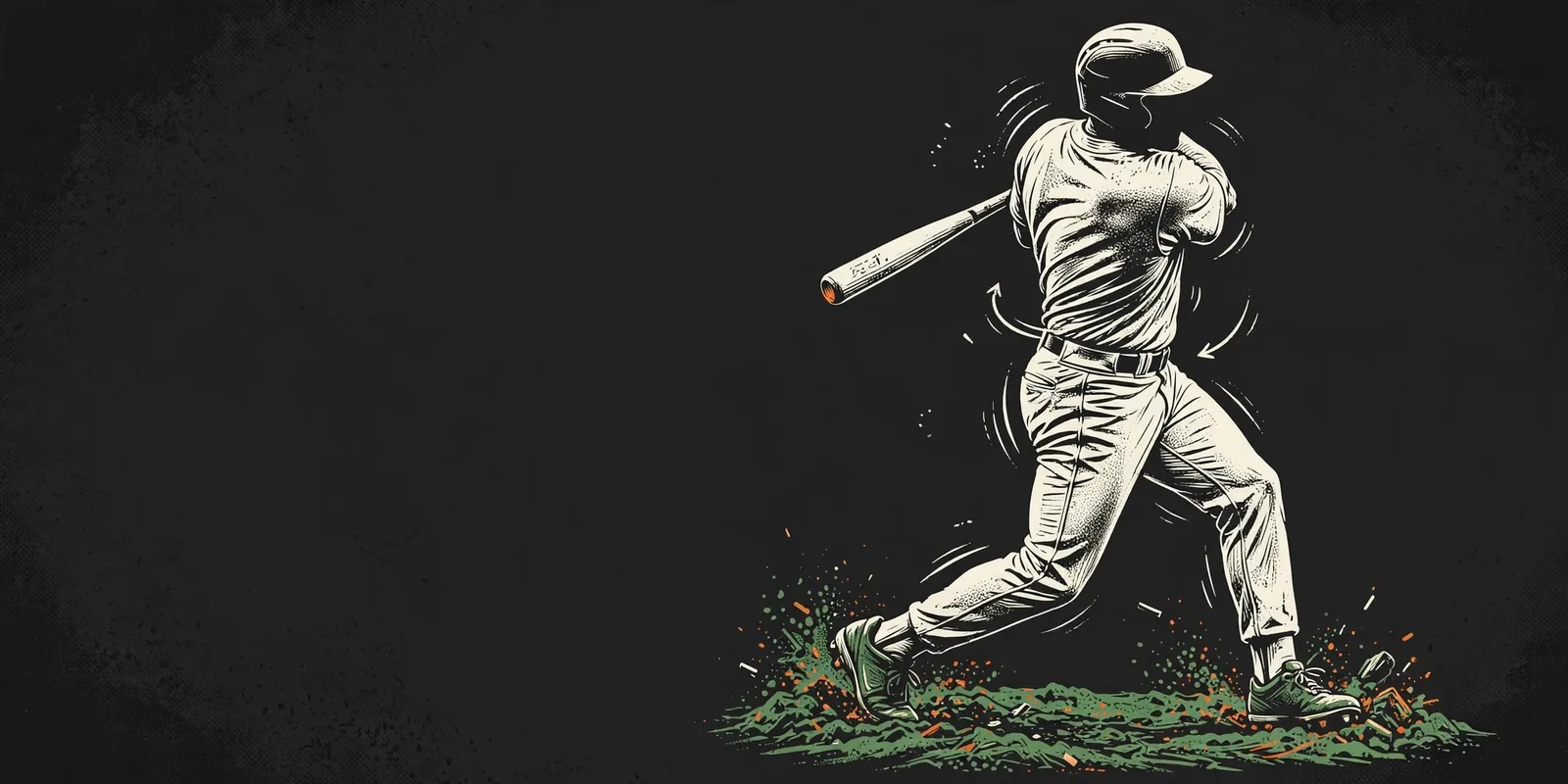
The hips reach top speed first, but that does not mean they start the swing. They have less distance to travel and larger muscles driving them. At the same time, the hands turn the barrel behind the body, which holds the shoulders back and makes the hips look even earlier.
Reciprocal movement—one side of the upper body working with the opposite side of the lower body—is the way humans are built to move. A correct foot grip engages the fascia, the body’s web of connective tissue, so the swing works as one connected action from the ground to the barrel.
Motion studies show when each body part reaches its fastest turning speed. Coaches then made a leap: because the pelvis reaches top speed first, it must start the swing. The measurement is real. That conclusion is not.
In one tee-hitting study that recorded 1,000 times per second, the pelvis reached top speed 12 milliseconds before the chest and upper trunk. The upper trunk peaked 8 milliseconds before the hand.
“Fire the hips first. Hold the shoulders back. Create separation.” Those are coaching instructions. The timing data itself does not say to move that way.
Three separate events matter: When does each body part begin helping? When does it reach top speed? When does it stop? The pelvis has a shorter path to travel, so it reaches the end of its turn sooner even though the body begins the action together. A correct foot grip connects that turn through the fascia while the hands and barrel work behind the body.
The pelvis also moves quickly because the glutes and other hip muscles are some of the body’s largest and strongest muscles. They can drive the pelvis to top speed fast, but that does not prove the pelvis led the movement. Faster does not mean first. Its shorter path and powerful muscles both make the pelvis peak early.
At the same time, the hands are turning the barrel behind the hitter. That action resists the shoulders and delays their turn, making the pelvis look even earlier. The visible gap has two causes: the hips are driven fast, and the shoulders are held back. A camera records the gap correctly. It does not prove the hips started a chain reaction that moved upward through the body.
The pelvis only looks like it goes first. It has less distance to travel—and it stops first.
This reading says the hips turn first and stretch the middle of the body like a rubber band, so coaches tell hitters to lead with the hips.
Mainstream claim: Speed moves upward one body part at a time, leaving the barrel last to move and last to reach top speed.
Reciprocal movement is the way humans are built to move.
The bedrock of the Grip the Ground model
When you run, your left arm moves with your right leg, and your right arm moves with your left leg. The body naturally pairs the upper half with the opposite side of the lower half. In the swing, the upper half begins the turn and the lower half stops first, allowing the back shoulder to travel across the front hip. This opposite-side pattern is the way humans are built to move. Grip the Ground applies it to the swing.
Grip the Ground is named for its foundation: The ground grip engages the fascia and the entire body moves as one: the chest and back drive the shoulders while the glutes and core drive the pelvis. Fascia is the web of connective tissue that links muscles throughout the body. The hands and barrel work behind this one-piece turn. Simply standing on the ground or keeping balance is not enough; the foot has to grip correctly.
The grip of the foot connects the lower and upper half. You connect the system from the ground up; you start the turn from the top.
That is the model’s apparent paradox—and its resolution. Connection flows upward; the turn initiates downward. The foot grips first and links the lower and upper halves through the fascia. Once that foundation is set, the chest and back start the turn. Ground-up connection and top-down initiation are not competing instructions; both are true at once.
A correct grip uses both sides of the foot. The little toes and outside edge connect to the hamstrings and glutes—the muscles along the back of the leg and hips. The big toe engages the quadriceps, the large muscle on the front of the thigh. Both sides must work so the whole leg, front and back, joins the movement.
Cleats and modern shoes can make the feet lazy because the shoe does too much of the stabilizing. The simple cue is: grip with the whole foot—little toes for the hamstrings and glutes, big toe for the quad. Using both sides of the foot prepares the body to create force with both sides of the turn.
The grip is the foundation, and everything starts with the foundation. You would not build the walls of a house before making the base solid. The swing works the same way. Correct foot grip connects the fascia, gives the chest and back a firm base to turn from and keeps both sides working together. It also lets the barrel continue when the pelvis stops naturally. Without that base, more strength or effort only adds force to a disconnected swing.
Technique creates the connection; grip strength makes that foundation more powerful. Once the foot is gripping correctly, a stronger grip gives the fascia a firmer base for holding the turn together. The movement does not climb the body like falling dominoes. The body organizes and turns as one connected system.
A strong grip also tightens the body’s “rubber band” before the swing starts. The fascia acts like an elastic web. A strong foot grip pulls that web tight, so the hitter does not need a big leg kick, a complicated load or extra movement to remove slack. When the feet prepare the system first, the swing can be simpler and more direct.
Muscle without connection is leakage.
Foundation before strength
Building muscle first gets the order wrong. More strength does not automatically put more force into the ball if the feet and fascia have not connected the body. That extra force leaks in different directions instead of traveling through the barrel. Strength matters only when the whole system can direct it.
Without that foundation, the body also limits its own speed. A disconnected body cannot safely handle the twisting force of a full-speed turn, so it slows down for protection—like a governor on an engine. Telling the hitter to “swing harder” does not solve that problem. Restore the foot grip and fascial connection, and the body can safely allow more rotational speed.
The turn has two sides, and they must work together. If the back side moves an inch, the front side must move an inch in the opposite direction at the same time. That matched action around the center of the body keeps force from leaking and sends it through the barrel. If one side lags, the connection weakens.
You can open a bottle without twisting the bottle backward. Hold it firmly and turn the cap; a strong grip is enough. Foot grip works the same way in the swing. Twisting the bottle in the opposite direction can add extra force, just as a scissor kick can, but that counter-twist is optional.
When a car stops suddenly, loose cargo keeps moving forward. The swing uses the same effect. Foot-grip strength, foot and stance angle, and direction of rotation determine the end point of rotation. When the pelvis reaches that point, it stops naturally while the barrel working behind continues forward.
The scissor kick is optional—not every hitter uses one. In a scissor kick, the back foot moves backward against the body’s turn. That counter-movement can add more twisting force when needed, but it does not stop the pelvis. It adds force; it is not the brake.
The upper half starts the turn; the lower half stops first. That natural stop gives the connected upper half something firm to turn against. It opens a diagonal path for the back shoulder to move across the front hip and transfers momentum into the barrel. A scissor kick can add force, but it does not create the stop. Telling the pelvis to go first breaks this natural opposite-side coordination.
A Ferrari accelerates hard and can stop on a dime. In this model, the chest and back start the barrel immediately; then the pelvis reaches its natural stop and transfers momentum forward.
A Mack truck takes longer to build speed and keeps plowing forward. A pelvis-first swing does the same: it makes the barrel wait, then struggles to reach a clean stop that transfers momentum efficiently.
The model needs both abilities. Speed without a controlled stop wastes force; a stop without speed produces nothing. Grip the Ground is designed to create fast acceleration and a clean stop.
Set the end point. Let the pelvis stop naturally—and let the barrel fly.
The coaching payoff
This does not mean the hips are passive. The pelvis works hard, but it works as part of the connected turn instead of acting as a separate starter. The goal is coordinated movement, not a deliberately created gap between hips and shoulders.
The shoulders do not turn themselves; the chest and back move them. Think of the torso as the engine and the shoulders as the transmission. If the pelvis spins ahead while the upper body stays back, the hands and arms must create speed late. The hitter loses the full body behind the barrel at the moment it matters most.
Bruce Lee’s one-inch punch produced enormous force with almost no hip rotation, no wind-up and both feet planted. If the pelvis had to start every powerful turning movement, that punch could not work.
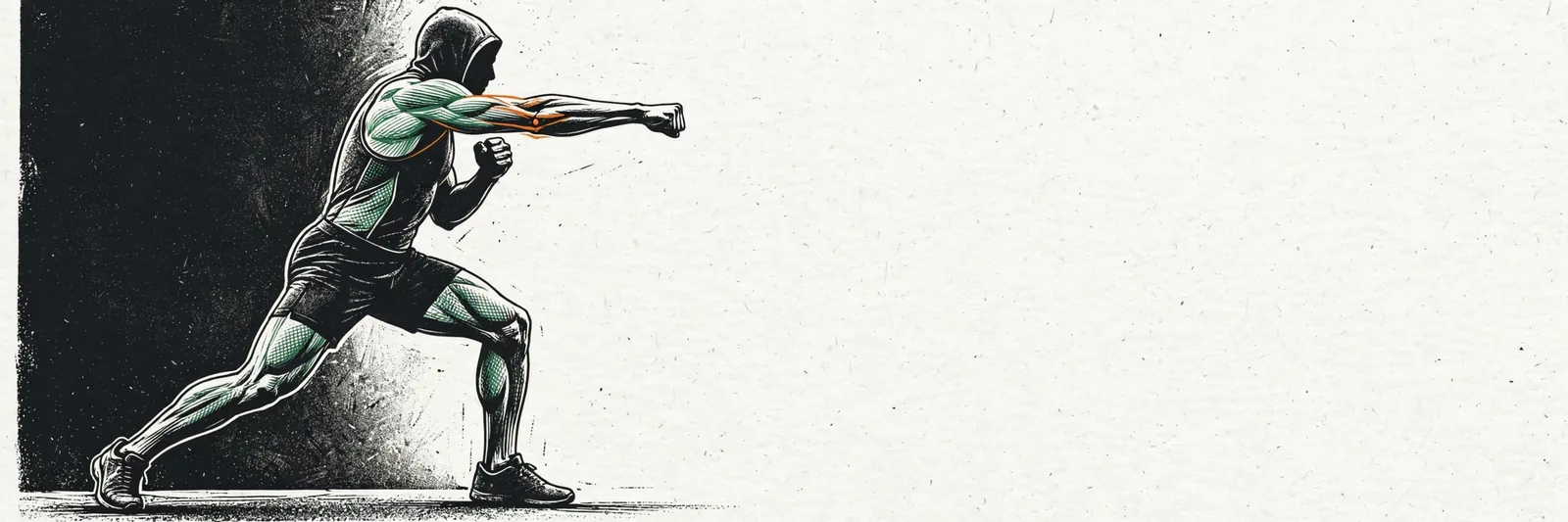
The feet anchor the body while the chest and back drive a connected movement. Power can travel through the whole system without the hips leading.
If a hips-first model cannot explain a powerful one-inch punch, it cannot fully explain a powerful swing.
The one-inch proof
A 100 mph pitch takes about this long to travel 60 feet 6 inches, using MLB’s published classroom formula. The hitter must see the pitch, decide whether to swing and deliver the barrel inside that brief window.
Because the pitch arrives so quickly, the hitter cannot afford to turn the swing into separate steps. The hips and shoulders may appear separated, but that visible gap comes from their different travel distances and speeds. It is an effect of the movement—not a gap the hitter should try to create.
The cue “hips now, shoulders later” turns one athletic action into two. That creates delay and makes it harder to adjust to the pitch. It also makes the barrel wait. When the chest and back begin the connected turn, the hands can turn the barrel behind right away, so the barrel starts moving sooner.
Speed alone is not enough. The front and back sides must move in equal and opposite directions. If one side gets ahead, force leaks and the hitter loses control. Keeping both sides matched lets the whole body build speed together instead of asking the arms to rescue the swing at the end.
The lower half reaches its natural stop first. Like cargo moving forward when a car brakes, the barrel working behind keeps going when the pelvis stops. That is how the swing can accelerate like a Ferrari and still stop cleanly instead of rolling forward like a Mack truck. A scissor kick may add extra twisting force, but it is optional and does not create the stop.
None of this works without the ground grip. If the feet do not connect the body through the fascia, the body senses that it cannot safely handle the twisting force and limits its own speed. A strong, correct grip releases that protective limit. The result is one connected swing that starts the barrel sooner, keeps both sides working together and delivers speed without adding extra movement.
Grip the Ground does not reject motion capture. It asks researchers to separate two events: when each body part first begins to move and when it reaches top speed. It also asks them to test the full swing under game-like pressure.
Set clear measurement rules for the pelvis, chest and upper trunk, hands and barrel. Do not assume that one event proves the other.
Use force plates—which measure how each foot pushes against the ground—along with high-speed cameras. Do not record only the speed of the body parts.
Test hips-first swings, connected chest-and-back-led swings and each hitter’s natural swing. Do not tell the analysts which version they are judging.
Measure barrel speed, time to contact, ability to adjust, quality of contact, repeatability and physical stress linked to injury.
Include fast pitches, breaking movement and changing locations. A swing model must work when the hitter has to see, decide and react.
Research measures how the feet push against the ground, how both hip joints create force, how force moves through the middle of the body and how quickly it reaches the bat. Those findings describe one connected system. They do not prove that coaches should tell the pelvis to pull away from the shoulders.
Barefoot training is a must in this model. Shoes stabilize the foot, so training without them makes the whole foot work: the little toes and outside edge connect the back of the leg and hips, while the big toe connects the front of the thigh.
Balance and grip work on a PVC pipe is this model’s most efficient way to build foot-grip strength. The unstable surface makes the little toes, outside edge and big toe work together. That strengthens the anchor that pulls the body’s elastic system tight through the fascia.
Baseball is measuring the wrong grip. Coaches often test hand-grip strength. This model says foot-grip strength contributes even more to power in both hitting and throwing because it connects the body and tightens its elastic system before the hands deliver the bat or ball.
Train the grip that connects the whole body.
Barefoot first • PVC balance pipe • Full foot active
A body part reaching its fastest speed first does not prove that it began the movement.
The hands and barrel working behind can make it harder to see that the chest and back are moving the shoulders.
The upper half starts and the lower half stops first, allowing the back shoulder to move across the front hip.
A powerful swing needs both: fast acceleration and the ability to stop on a dime so the barrel can keep moving forward.
The question is not “what peaked first?” The question is “what did the athlete organize to deliver the barrel?”
The Grip the Ground Hitting Model
These studies measured when body parts reached top speed and how force moved through the swing. None proved that a hitter should start by spinning the pelvis ahead of the upper body. Coaches added that instruction after seeing the measurements. Grip the Ground offers a different explanation: a strong foot grip organizes one connected turn, the pelvis finishes its shorter path sooner and the hands and barrel work behind.